 ResoluteMake my plan
Most goals don't die in a dramatic moment.
They fade. You write them in January, you're excited for a few weeks, and then you just... stop looking at them. In December you find the note and realize you forgot it existed.
A goal you don't look at is a goal you don't have.
The fix is boring and it works: look at your goals once a week. Twenty minutes, every Sunday.
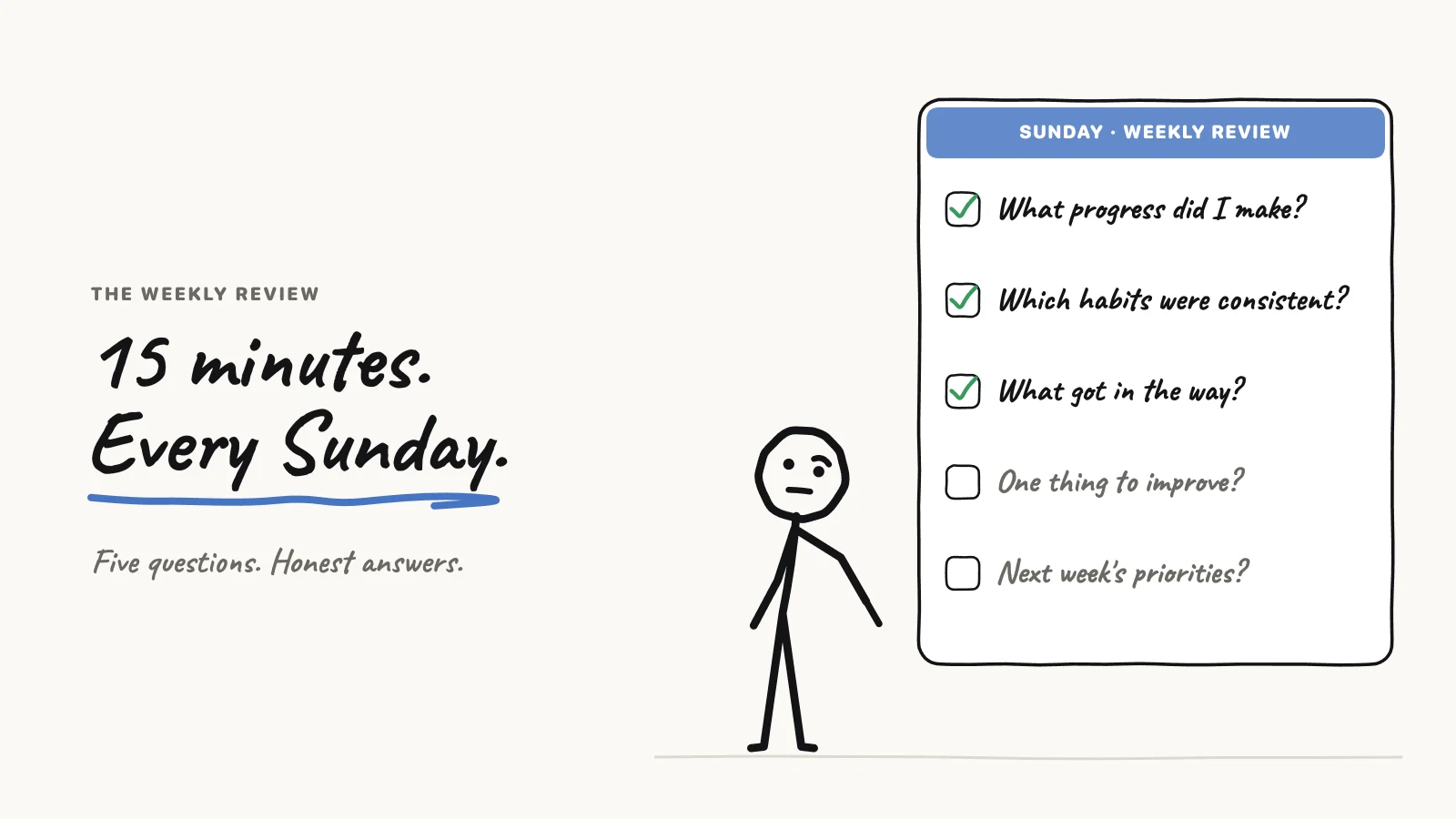
The 5 weekly review questions
Sit down on Sunday evening with your goals in front of you. Answer these, in writing:
- What progress did I make? On each goal, not just the easy one.
- Which habits were consistent? Count the days, don't guess.
- What prevented progress? Be specific. "I was busy" isn't an answer. "I worked late Tuesday and Wednesday and skipped both runs" is.
- What can I improve next week? One change, not five.
- What are next week's priorities? Then put them in your calendar before Monday starts.
That's the whole review. The last question is the one that matters most: a review that doesn't end with next week planned is just journaling.
Know where you stand
After the five questions, give each goal a status:
- 🟢 On track – you're where you planned to be.
- 🟡 At risk – you're falling behind, but you have a recovery plan.
- 🔴 Off track – you're far behind and need to change the plan.
Be honest. "At risk" in March is easy to fix. "Off track" discovered in November is a regret.
Track actions and results separately
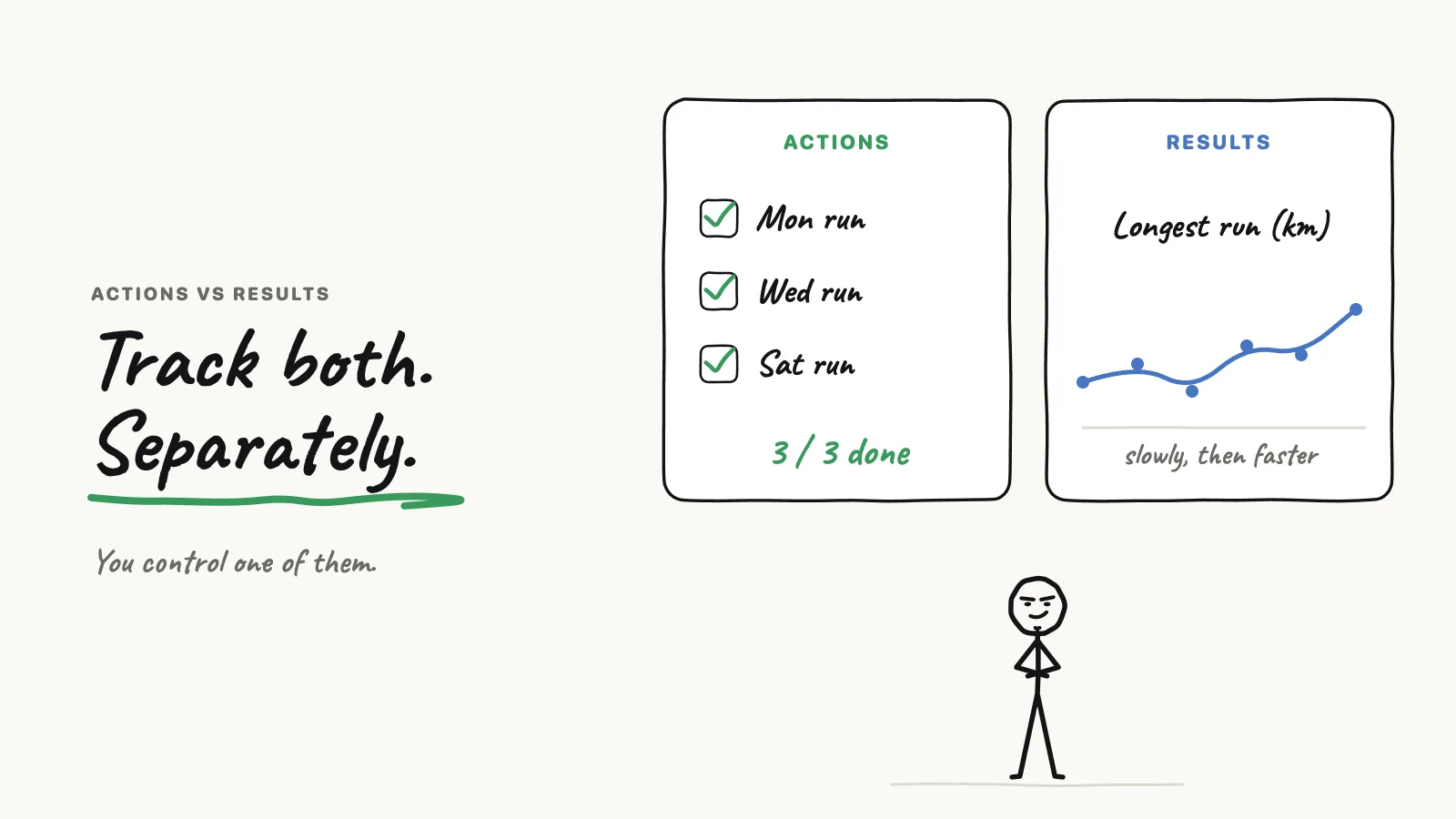
When you mark progress, track two things:
- Actions: what you did. Workouts done, emails sent, pages written.
- Results: what changed. Your 5K time, your clients, your savings.
You control the actions. The results show you if they're working. If you're doing everything and results aren't moving, the problem is the plan, not your discipline. If results aren't moving because you're skipping the actions, the problem isn't the plan.
The daily and quarterly versions
The weekly review sits between two smaller and bigger loops.
Daily (2 minutes, before bed):
- What did I accomplish today?
- What did I struggle with?
- What did I learn?
- What should I do tomorrow?
Quarterly (1 hour, every 3 months):
- Did I reach my milestones for this quarter?
- Am I on track for my annual goals?
- Is my strategy working?
- What needs to change?
- What are my goals for the next quarter?
Daily keeps you moving. Weekly keeps you honest. Quarterly keeps you pointed in the right direction. A good time to redo your Wheel of Life is at the quarterly review.
Make it stick
- Same time, same place. Sunday at 7pm with a coffee works better than "sometime on the weekend."
- Keep it short. If your review takes two hours, you'll stop doing it by February.
- Send a short update to someone. One message to a friend: how consistent you were, how your goals are moving. In psychologist Gail Matthews' goal-setting study, the people who sent weekly progress updates to a friend did best of all.
The weekly review is Step 17 of the full system. The rest of it (from choosing what you'll celebrate on December 31 to building your ideal week) is in How to have the best year of your life.
FAQ
How long should a weekly review take?
About 20 minutes. Long enough to look at every goal and plan next week, short enough that you'll keep doing it.
What day is best for a weekly review?
Sunday evening works for most people because it lets you plan the week before it starts. Friday afternoon works too, if you want your weekend free of work.
What's the difference between a weekly and a quarterly review?
The weekly review checks progress and plans next week. The quarterly review asks whether the plan itself still makes sense, and changes it if not.