 ResoluteMake my plan
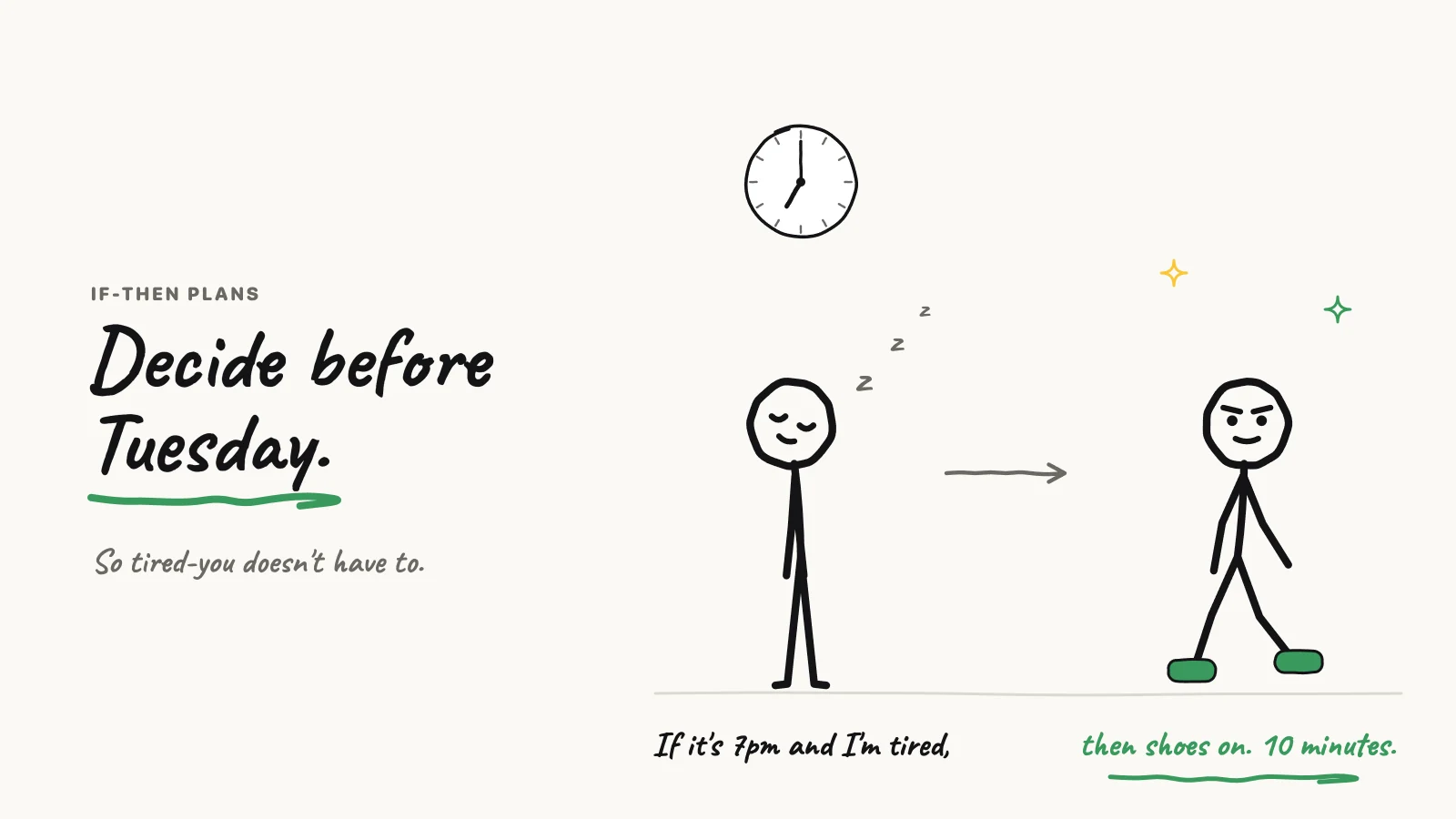
You don't fail your goals on January 1st.
You fail them on a random Tuesday in March, at 7pm, tired, with your phone right there. In that moment, "I'll do it tomorrow" sounds completely reasonable.
The fix is to make that decision now, before Tuesday arrives. That's what an if-then plan does.
What is an if-then plan?
An if-then plan is a decision made in advance:
If [situation], then I will [action].
Psychologists call them implementation intentions. The idea comes from Peter Gollwitzer at NYU, and it's one of the most studied tools in behavior psychology. A well-known meta-analysis by Gollwitzer and Paschal Sheeran, covering 94 studies, found that people who made if-then plans were significantly more likely to reach their goals than people who only set the goal.
Why it works: you link a specific moment to a specific action. When the moment shows up, you don't have to decide. The decision is already made.
How to write a good one
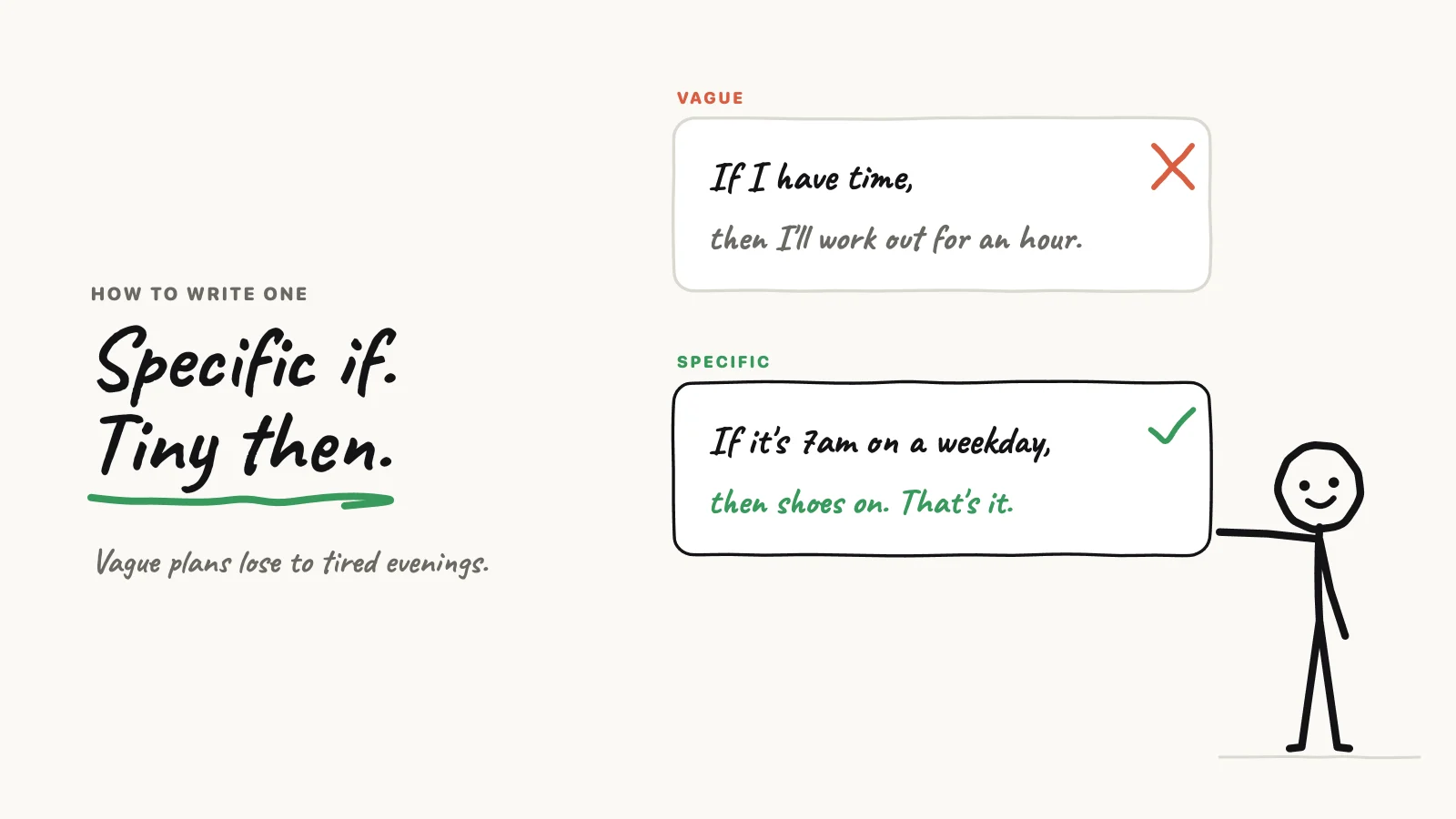
Make the "if" specific. "If I have time" is not a situation. "If it's 7am on a weekday" is.
Make the "then" small. "Then I'll work out for an hour" will lose against a tired version of you. "Then I'll put on my running shoes" won't.
Aim it at your real obstacle. The best if-then plans answer the question: what usually stops me? Then they plan around exactly that.
30 if-then plan examples
When motivation fades
- If I don't feel like doing it, then I do the 2-minute version.
- If I lose motivation, then I re-read why this goal matters to me.
- If I want to quit, then I wait until my weekly review to decide.
- If I miss a day, then I never miss two in a row.
- If I'm behind on my goal, then I adjust the plan instead of dropping it.
When work gets busy
- If work gets crazy, then I protect my 3 most important blocks and drop the rest.
- If a meeting lands on my workout time, then I move the workout, not cancel it.
- If I work late, then I do a 10-minute version before bed.
- If my week is overloaded, then I pick one priority per day.
- If I get home exhausted, then I change clothes before I sit down.
Health and fitness
- If my alarm goes off, then I put my feet on the floor before I decide anything.
- If it rains, then I do a workout at home.
- If I'm craving something sweet after dinner, then I make tea first.
- If I'm at a restaurant, then I order before I look at the dessert menu.
- If I get sick or injured, then I restart with half the volume as soon as I'm better.
Focus and phone
- If I pick up my phone during focus time, then I put it in another room.
- If I open social media in the morning, then I close it and read 5 pages first.
- If I catch myself procrastinating, then I work on it for just 5 minutes.
- If I sit down at my desk, then I close email until 11am.
- If I get distracted, then I write the distraction down and get back to work.
Career and business
- If I'm avoiding outreach, then I send one message before opening email.
- If a client asks for something outside the scope, then I reply with a quote, not a yes.
- If I finish a project, then I ask for a testimonial the same day.
- If it's Monday morning, then I send 10 personalized emails.
- If I feel stuck on a task, then I write the next physical action on a sticky note.
Learning and relationships
- If I'm on public transport, then I do one language lesson.
- If I finish dinner, then I read for 15 minutes.
- If it's Sunday, then I call my parents.
- If I'm annoyed with my partner, then I wait 10 minutes before replying.
- If it's the first Friday of the month, then I plan something with a friend.
Where to use them
If-then plans are the "P" in the WOOP method, and they're the core of Step 13 in How to have the best year of your life: imagine it's December 31 and you didn't reach your goal, name what went wrong, and write an if-then plan for each reason.
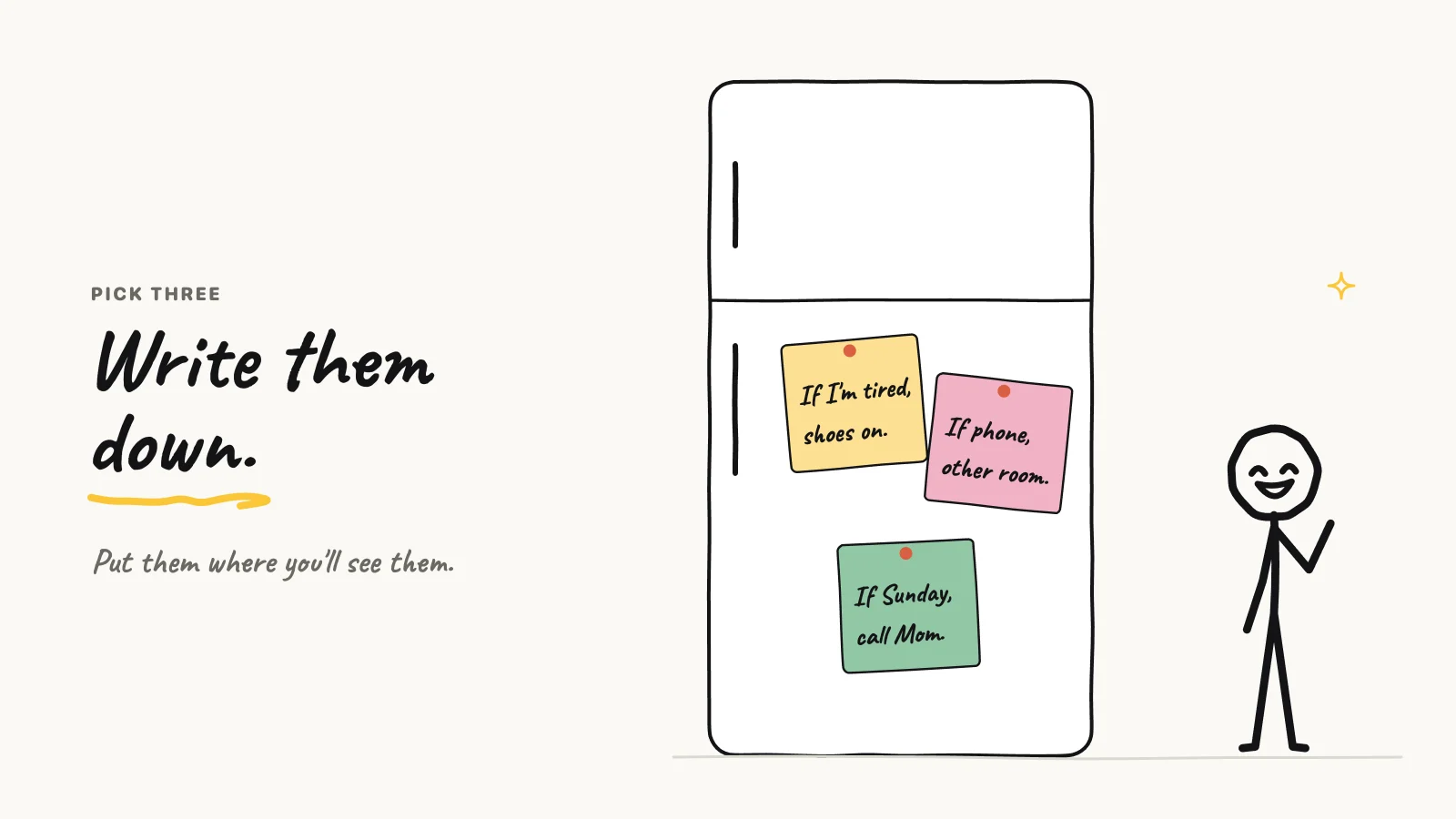
Pick three. Write them down. Put them where you'll see them.
FAQ
What is an implementation intention?
A plan in the form "If situation X happens, then I will do Y." The term comes from psychologist Peter Gollwitzer.
How many if-then plans should I have?
Start with 1 to 3, aimed at the obstacles most likely to stop you. Too many and you won't remember them.
Do if-then plans really work?
Yes. A meta-analysis of 94 studies by Gollwitzer and Sheeran found they have a meaningful effect on reaching goals compared with goal-setting alone.